Whistleblowers, American Heroes, and Qui Tam Claims
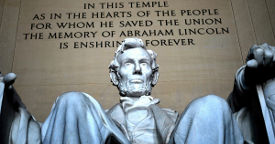
During the Civil War, corrupt military contractors were defrauding the United States Army out of hundreds of thousands of dollars and putting troops at risk by supplying troops with defective products and faulty war equipment. Illegal price gouging was a common practice and the armed forces of the United States suffered. In response, Abraham Lincoln enacted the Federal Civil False Claims Act. A key provision of the act was known as qui tam.
The abbreviation is from Latin and refers to "a person who files a suit for the king as for himself". Qui tam laws have existed for centuries as deceptive government contractors have been around as long as government contracting has. Qui tam actions allow a private citizen to file a lawsuit on behalf of the U.S. government in an effort to recover losses caused by fraud against the government. The law is an incentive for civilians who know of individuals or companies making false claims for profit to come forward with information. In reward, the "whistleblower" (also known as the relator) shares in any federal revenue recovered.
If you are aware of a defense contractor, highway contractor, large health care company, or other large contractor or subcontractor that is defrauding the United States Government out of millions or billions of dollars, contact Texas Qui Tam Lawyer Jason Coomer.
History of Qui Tam Claims
In 1986 as a result of increased government contractor fraud, Congress amended the False Claims Act in order to make it easier for whistleblowers to file claims against fraudulent corporations and individuals.
The 1986 Amendment defines a "claim" as:
"...any request or demand which is made to a contractor, grantee, or other recipient if the United States Government provides any portion of the money or property which is requested or demanded, or if the government will reimburse such contractor, grantee, or other recipient for any portion of the money or property which is requested or demanded."
The whistleblower's share of recovery is a maximum of 30 percent and the government's prior knowledge of fraud now does not necessarily bar a whistleblower from collecting lost revenue. If the government took over the lawsuit, the relator can "continue as a party to the action." The defendant is also required to pay for the relator's attorney fees. The whistleblower is also protected from retaliatory actions by his or her employer. As a result or the amendment, qui tam lawsuits increased dramatically. Though the amendment was first made fore corrupt defense contractors, the amendment has uncovered billions of dollars in health care fraud.
Anyone who defrauds the government out of revenue can be held accountable under the False Claims Act. Common defendants include defense contractors, health care providers, other government contractors and subcontractors, state and local government agencies, and private universities. Whistleblowers often include current and former employees of the defrauding company, competitors of government contractors and public interest groups.
The False Claims Act was enacted to encourage private citizens to assist the government in the fight against fraud. Often the whistleblower faces an uphill battle as large, powerful corporations or individuals are usually named as defendants. An experienced attorney in qui tam claims may help you gain a percentage of stolen government funds.
Qui tam actions typically revolve around false claims that are either directly or indirectly presented to the Government for "payment or approval." These false claims can be generated through the submission of false bills, records, statements or other representations made to the Government.
There are several types of Qui Tam claims covered under the False Claims Act:
- Mischarging or overcharging for goods or services.
- Improper price data and the request for payment for services never provided.
- Holding government property for fraudulent purposes.
- Avoiding payment of a debt to the government because of illegal reasons.
- Knowingly providing the government with defective or dangerous products that were falsely certified.
- Falsely certifying information for the entitlement of benefits.
- Having any false claim paid by the government.
The mischarging case is the most common type of qui tam case filed. Mischarging cases generally involve filing false claims for goods or services that were not provided or delivered. A common mischarging scenario is employee labor charged to a government contract not worked on. Other common mischarging schemes are claims made to the Government for medical services not rendered or for services performed by an attending physician when the service was actually performed by a nurse or other provider that should have been billed at a lower rate.
Another type of case is the false negotiation or defective pricing case that involves the submission of false cost and pricing data to the Government. This scheme, which takes on many forms, involves the submission of false costs or pricing data to the Government during the negotiation of a contract that subsequently results in an inflated contract price.
Other common types of cases involve product and service substitution and false certification of entitlement for benefits. Examples of product and service substitution are falsely certifying that a product meets specifications, false testing schemes such as falsely certifying that reliability testing was conducted and providing an inferior service or product. Examples of false certification of entitlement cases are falsely certifying information for FHA mortgage guarantees and price supports.
Potential heroes that blow the whistle on government fraud and corruption include employees, former employees, high-level executives, sub contractors, general contractors, and people working with major defense contractors, telecommunications companies, and large health care organizations.
Qui Tam Claim Lawyers and Lawsuits
If you are aware of a defense contractor, highway contractor, large health care company, or other large contractor or subcontractor that is defrauding the United States Government out of millions or billions of dollars, contact Texas Qui Tam Lawyer Jason Coomer. As a Texas government fraud Lawyer, he works with other powerful qui tam lawyers that handle large governmental fraud cases. He works with San Antonio Qui Tam Lawyers, Dallas Qui Tam Lawyers, Houston Qui Tam Lawyers, and other Texas Qui Tam Lawyers as well as with Qui Tam Lawyers throughout the nation to blow the whistle on fraud that hurts the United States and our armed forces.
Feel Free to Contact Us with any Questions
Associations